NURUSHOP
Loading NuruShop products
NuruShop is loading
Getting everything ready for you…
Support available Sunday–Friday
© 2026 NuruShop. Health & Truth.
Good to know
Everything you need to make a confident choice.
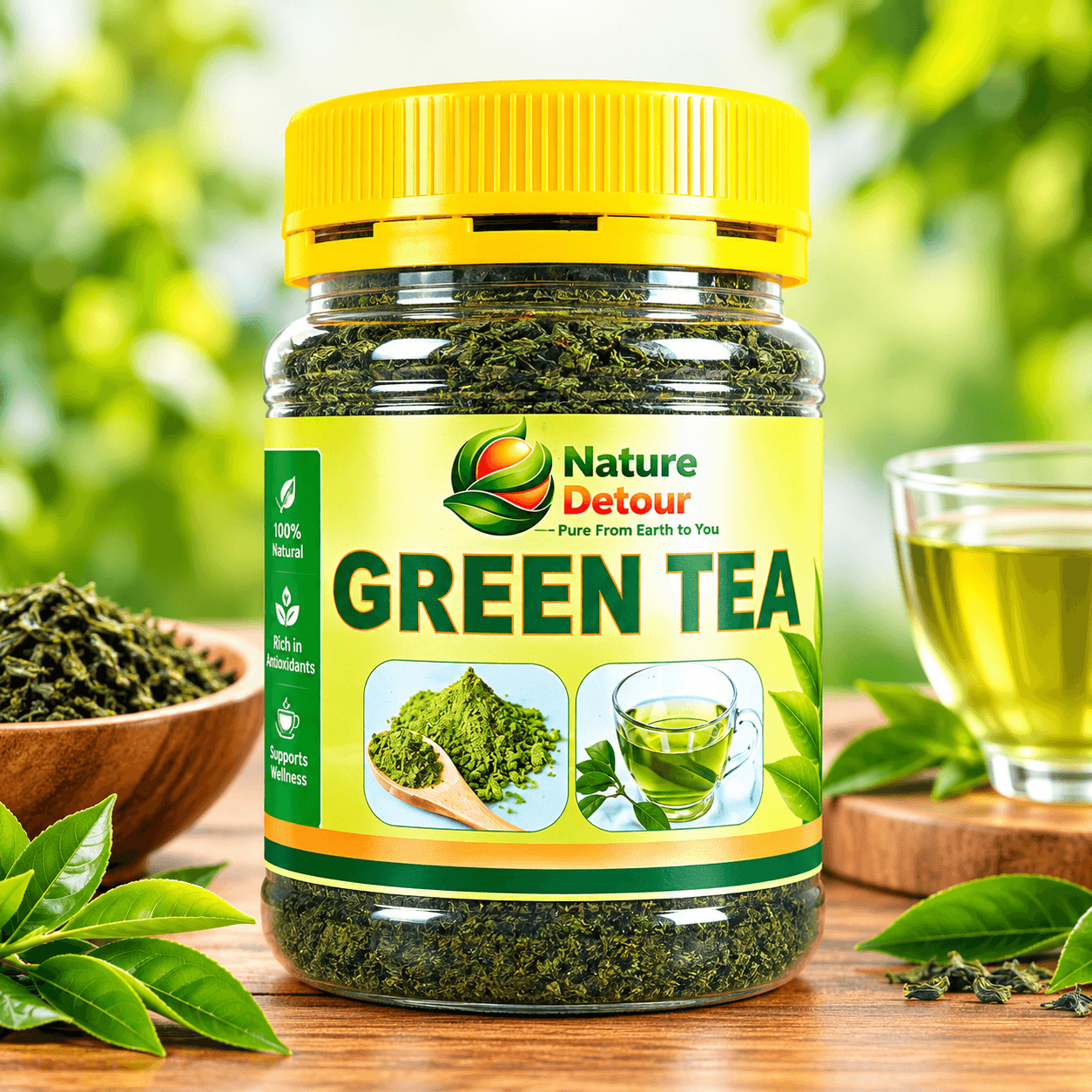
Green tea (from Camellia sinensis) is genuinely rich in catechins, especially EGCG, which give it strong antioxidant activity..
Evidence-based benefits
- Antioxidants & overall protection: High in polyphenols that help combat oxidative stress. This underpins many of the other effects.
- Heart health & cholesterol:
Regular consumption is linked to modest reductions in total and LDL cholesterol, small improvements in blood pressure, and lower risk of cardiovascular events in some population studies.
- Metabolism & weight:
Green tea (or extracts) can produce small reductions in body weight, BMI, and body fat, partly via mild thermogenic and fat-oxidation effects. Effects are modest, not dramatic.
- Blood sugar / diabetes risk:
Some evidence for improved glucose control and lower risk of type 2 diabetes with regular intake.
- Oral health: Catechins have antibacterial effects that can help reduce oral bacteria, support tooth enamel, lower cavity risk, and freshen breath—claims like “prevents cavities,” “strengthens tooth enamel,” “reduces bacteria,” and “prevents bad breath” have reasonable backing.
- Brain health: Observational data and some trials suggest possible protection against cognitive decline/dementia; mechanisms include antioxidant and anti-inflammatory actions.
- Skin & circulation:
Antioxidants may support healthier skin appearance and circulatory function over time.
Overall, 2–3 cups of properly prepared green tea per day is a healthy habit for most people, but it is not medicine. Concentrated extracts can carry higher risks (e.g., rare liver issues at very high doses), so the whole-leaf or powdered form in your jar is generally preferable for everyday use.
Brewing tip (your advice is spot-on)
Green tea becomes bitter when water is too hot or steeping is too long because excess tannins and catechins are extracted aggressively.
Best practice:
- Water temperature: 70–80 °C (160–180 °F)— hot but not boiling. If you only have boiling water, let it sit 2–5 minutes after boiling before pouring.
- Steeping time: 1–3 minutes (start with 2 minutes and taste;
This preserves the pleasant grassy/umami notes and maximizes beneficial compounds without harsh bitterness. Cold-brewing (leaves in cold water in the fridge for several hours) is another excellent bitterness-free option.
Enjoy your green tea—it is one of the better everyday beverages for long-term health when prepared well. If you have specific health conditions or take medications, check with a doctor, as high intake can interact with certain drugs (e.g., blood thinners or stimulants due to caffeine).
Customer feedback
Be the first to review
—
0 verified reviews
Keep exploring
 -43%
KSh 350.00
KSh 200.00
 -38%
KSh 320.00
KSh 200.00
 -49%
KSh 390.00
KSh 200.00
 -43%
KSh 350.00
KSh 200.00